

The Unseen Forces Shaping Tomorrow: How Today’s Political Tides Could Reshape the World
Politics is not just about policies or power—it’s about perception, momentum, and the slow but relentless movement of public sentiment. Today’s political tides are more than just headlines; they are the undercurrents that will define tomorrow’s global landscape. From the rise of populist movements to the shifting alliances of superpowers, the decisions made in boardrooms, parliaments, and protest sites are setting the stage for a world that may look radically different in a decade. Understanding these shifts is not just the domain of politicians or pundits—it’s a necessity for anyone who wants to navigate the future with clarity and foresight.
The pace of change in global politics has never been faster. In the span of a few years, we’ve witnessed the fall of long-standing regimes, the resurgence of ideological divides, and the emergence of new economic powerhouses that challenge the old order. These changes are not isolated incidents; they are interconnected waves that ripple across continents, altering trade routes, security alliances, and cultural narratives. To grasp where we’re headed, we must first examine the forces that are already in motion.
The Rise of Populism and the Decline of the Political Center
One of the most defining trends of the past decade has been the erosion of the political center and the rise of populist movements on both the left and the right. Populism thrives on disillusionment, offering simple solutions to complex problems and channeling public anger into political power. Whether it’s the Brexit vote in the United Kingdom, the election of Donald Trump in the United States, or the growing support for far-right parties in Europe, populism has redefined the boundaries of acceptable discourse and governance.
What makes this shift particularly consequential is its global nature. From Brazil to India, from the Philippines to Italy, populist leaders have capitalized on economic inequality, cultural anxiety, and distrust in traditional institutions to ascend to power. Their policies often prioritize nationalism, protectionism, and a skepticism of global cooperation—a stark contrast to the post-World War II consensus that emphasized multilateralism and open markets. The long-term implications of this shift are still unfolding, but one thing is clear: the era of unchallenged liberal democracy is over, and the era of identity-driven politics is in full swing.
The consequences of this trend are already visible. Trade wars have replaced trade deals, alliances like NATO face unprecedented strain, and international institutions such as the United Nations and the World Trade Organization struggle to maintain relevance. Meanwhile, domestic politics in many countries has become more polarized, with compromise increasingly seen as weakness and gridlock the norm. The question now is whether this populist wave will crest and recede, or if it will become the new foundation for global governance.
The Geopolitical Chessboard: Shifting Alliances and New Power Centers
While populism dominates the headlines, another seismic shift is quietly taking place on the geopolitical chessboard. The balance of power between nations is in flux, with traditional superpowers like the United States and Europe facing challenges from rising powers like China, India, and regional blocs such as the African Union and ASEAN. This realignment is not just about military strength or economic dominance—it’s about shaping the rules of the 21st century, from technology standards to climate policy.
China’s ascent is perhaps the most visible example of this shift. Through its Belt and Road Initiative, technological dominance in areas like 5G and artificial intelligence, and strategic investments in Africa and Latin America, China is not only challenging U.S. hegemony but also redefining the very nature of global influence. Meanwhile, Russia’s assertive foreign policy—from its annexation of Crimea to its involvement in conflicts like Syria—has demonstrated that even a declining power can punch above its weight through military innovation and information warfare.
Europe, long seen as the bastion of stability, is also experiencing its own transformation. The European Union, once a model of supranational cooperation, now grapples with internal divisions, Brexit, and the rise of Eurosceptic movements. Yet, it remains a critical player in global affairs, particularly in areas like climate policy and human rights. The question is whether Europe can assert itself as a unified bloc or if it will continue to fragment under the weight of nationalism and economic disparities.
In the Global South, new power centers are emerging. India, with its young and dynamic population, is positioning itself as a counterbalance to China in Asia, while also deepening ties with the West. African nations, often overlooked in geopolitical discussions, are leveraging their natural resources and demographic dividends to negotiate better terms in trade and diplomacy. The African Continental Free Trade Area (AfCFTA), for example, aims to create the world’s largest single market, signaling a shift toward intra-African economic integration.
These shifts are not just about who holds power but about what kind of power is wielded. The 21st century is less about territorial conquest and more about technological superiority, soft power, and the ability to set global standards. The nations that understand this—and adapt accordingly—will be the ones shaping the future.
The Climate Crisis as a Political Catalyst
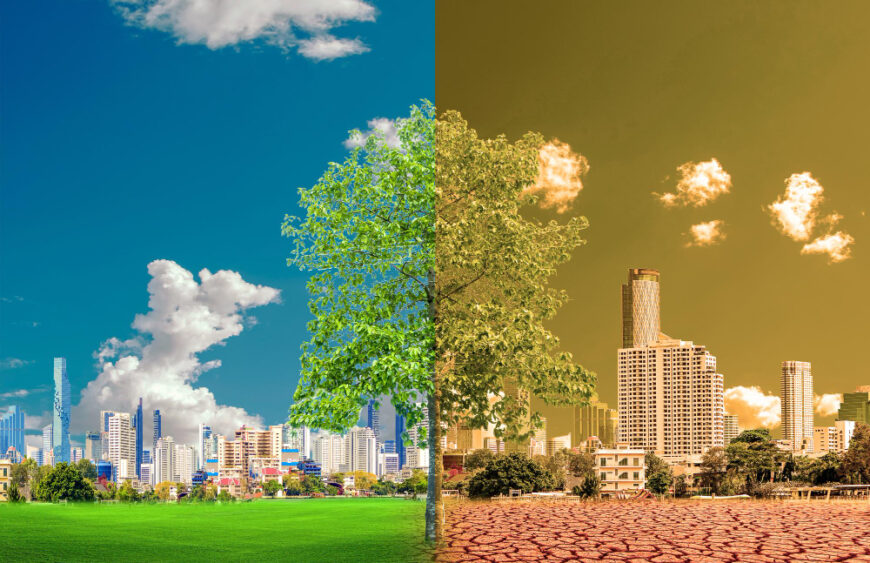
No discussion about the future of global politics would be complete without addressing the climate crisis. The environment is no longer a niche issue confined to activists and scientists; it has become a central driver of policy, diplomacy, and even conflict. From wildfires in Australia to floods in Pakistan, extreme weather events are forcing governments to confront the reality of climate change—and their responses are reshaping the political landscape.
One of the most notable shifts is the growing recognition of climate change as a security issue. The Pentagon, for instance, has identified climate change as a “threat multiplier,” exacerbating resource scarcity, mass migration, and regional instability. This has led to calls for climate adaptation strategies, such as investing in renewable energy and infrastructure resilience, but it has also sparked debates over how to fund these efforts. Should wealthier nations bear the cost of helping developing countries transition away from fossil fuels? Should climate reparations be a part of international aid? These questions are already fueling political tensions within and between nations.
Another consequence of the climate crisis is the rise of environmental populism. Movements like Extinction Rebellion and the Sunrise Movement have pushed climate action to the forefront of political agendas, forcing even reluctant governments to take action. In some cases, this has led to bipartisan support for green policies, as seen in the European Green Deal. In others, it has deepened political divides, with climate denialism becoming a rallying cry for populist leaders who reject scientific consensus in favor of economic nationalism.
The geopolitical implications are equally significant. Countries rich in critical minerals like lithium and cobalt—essential for green technologies—are finding themselves in a position of newfound leverage. Meanwhile, fossil fuel-dependent nations face existential threats, leading some to double down on extraction while others invest heavily in alternative energy. The result is a patchwork of policies that could either accelerate global cooperation or deepen divisions.
Ultimately, the climate crisis is not just an environmental issue; it is a political one. How nations respond to it will determine not only the health of the planet but also the stability of global order in the decades to come.
The Digital Revolution: Technology as a Political Force
If the 20th century was defined by industrialization and the 21st by globalization, the 21st century’s defining feature may well be the digital revolution. Technology is no longer a tool of governance or a means of economic growth—it is an actor in its own right, shaping political narratives, influencing elections, and even redefining sovereignty. The rise of social media, artificial intelligence, and blockchain has given individuals and non-state actors unprecedented power, while also creating new vulnerabilities for democracies and authoritarian regimes alike.
Social media platforms, in particular, have become the new battlegrounds for political influence. The Cambridge Analytica scandal exposed how data analytics could be weaponized to manipulate public opinion, while state-sponsored disinformation campaigns—from Russia’s interference in the 2016 U.S. election to China’s influence operations abroad—have demonstrated the fragility of democratic processes. Governments are now grappling with how to regulate these platforms without stifling free speech or innovation. The European Union’s Digital Services Act and Digital Markets Act are early attempts to reign in Big Tech, but the long-term effects remain unclear.
Artificial intelligence is another frontier where politics and technology intersect. AI has the potential to revolutionize industries, from healthcare to transportation, but it also raises ethical and security concerns. Who controls AI development? How do we prevent algorithmic bias and misuse? These questions are already sparking debates over regulation, with some advocating for strict oversight and others pushing for a more laissez-faire approach. Meanwhile, authoritarian regimes are using AI to enhance surveillance and suppress dissent, raising fears of a dystopian future where technology is used to enforce conformity rather than freedom.
Blockchain and cryptocurrencies add another layer of complexity. On one hand, they promise financial freedom and decentralization, challenging the dominance of traditional banks and governments. On the other, they enable illicit activities like money laundering and ransomware attacks, forcing regulators to play catch-up. The rise of central bank digital currencies (CBDCs) further blurs the line between innovation and control, as governments seek to harness blockchain for monetary policy while maintaining oversight.
The digital revolution is not just changing how politics is conducted—it’s changing who gets to participate in it. Grassroots movements can now organize globally with a single hashtag, while governments struggle to keep pace with the speed of technological change. The challenge for policymakers is to harness the benefits of technology while mitigating its risks, ensuring that innovation serves the public good rather than undermines it.
What Lies Ahead: Scenarios for the Future
The political tides of today are setting the course for a world that could take several different paths in the coming decades. While the future is never certain, we can outline some plausible scenarios based on current trends and potential disruptions.
- Scenario 1: A Fragmented World
The rise of populism, nationalism, and protectionism leads to a breakdown of global institutions. Trade wars escalate into resource conflicts, and climate change exacerbates inequality, sparking mass migration and regional instability. The European Union fractures, NATO weakens, and the United States retreats into isolationism. Meanwhile, China and other rising powers fill the void, creating a multipolar world where cooperation is rare and competition is the norm. In this scenario, technological progress continues, but its benefits are unevenly distributed, deepening global divisions.
- Scenario 2: A New Multilateralism
Despite the challenges, a new wave of global cooperation emerges. Recognizing the existential threats posed by climate change and technological disruption, nations begin to rebuild trust and forge new alliances. The United Nations is reformed to include more equitable representation, and new institutions are created to address issues like AI governance and cybersecurity. Regional blocs like the African Union and ASEAN become more influential, while middle powers like India and Brazil act as bridges between East and West. In this scenario, the digital revolution fosters transparency and civic engagement, leading to more inclusive and responsive governments.
- Scenario 3: Authoritarian Resurgence
The appeal of strongman leadership grows as governments prioritize stability over freedom. Democratic backsliding accelerates in countries like Hungary and Turkey, while authoritarian regimes in China, Russia, and beyond expand their influence through economic coercion and technological surveillance. The internet becomes increasingly balkanized, with governments controlling digital spaces to suppress dissent. Meanwhile, climate change is met with heavy-handed policies that prioritize order over equity, leading to social unrest and environmental degradation. In this scenario, the 21st century becomes defined by the clash between freedom and control.
- Scenario 4: A Techno-Utopia
Breakthroughs in renewable energy, healthcare, and AI lead to unprecedented prosperity and collaboration. Governments embrace decentralized technologies like blockchain and renewable microgrids to empower communities and reduce inequality. Climate action becomes a unifying cause, with nations competing to achieve net-zero emissions. Meanwhile, AI and automation free humans from mundane labor, enabling a renaissance of creativity and innovation. In this scenario, the digital revolution democratizes power, leading to a more equitable and sustainable world.
Of course, the future will likely be a mix of these scenarios, with some regions thriving while others struggle. The key question is whether humanity can navigate these tides with foresight and cooperation, or if it will be swept away by the currents of division and short-term thinking.
How Can We Steer the Tide? The Role of Individuals and Institutions
The political tides of today are not inevitable; they are the result of choices made by leaders, institutions, and ordinary citizens. While the forces of change are powerful, they are not unstoppable. By understanding the underlying currents, we can influence where they lead. Here’s how different actors can play a role in shaping a more stable and equitable future:
The Role of Governments
- Reform Global Institutions: The United Nations, World Trade Organization, and International Monetary Fund were designed for a different era. Reforming them to reflect 21st-century realities—such as giving more representation to African and Asian nations—could restore their legitimacy and effectiveness.
- Invest in Resilience: Climate change, pandemics, and cyber threats are not distant risks but immediate challenges. Governments must prioritize resilience by investing in green infrastructure, pandemic preparedness, and cybersecurity defenses.
- Regulate Technology Responsibly: The digital revolution must be guided by ethical frameworks that protect privacy, prevent misinformation, and ensure equitable access to technology. This includes international agreements on AI governance and data sovereignty.
- Foster Inclusive Growth: Populism thrives on inequality. Governments must implement policies that reduce economic disparities, such as progressive taxation, universal basic income, and investments in education and healthcare.
The Role of Civil Society
- Hold Power to Account: Independent media, watchdog organizations, and grassroots movements play a crucial role in exposing corruption, challenging misinformation, and advocating for policy changes. Supporting these groups ensures that democratic processes remain vibrant.
- Promote Dialogue: Polarization thrives in echo chambers. Civil society can bridge divides by fostering conversations between opposing groups, whether through community forums, intercultural exchanges, or digital platforms that encourage constructive debate.
- Champion Innovation: From renewable energy to decentralized finance, civil society can drive bottom-up solutions that governments and corporations overlook. Crowdfunding, open-source projects, and social enterprises can demonstrate alternative models of governance and economics.
The Role of Individuals
- Stay Informed and Engaged: In a world of algorithm-driven news and deepfake propaganda, critical thinking is more important than ever. Seek out diverse sources, fact-check claims, and engage in informed discussions rather than echoing viral soundbites.
- Vote and Participate: Democracy requires active participation. Beyond casting a ballot, individuals can attend town halls, join advocacy groups, or run for local office to influence policy from the ground up.
- Adopt Sustainable Practices: Climate change is a collective problem, and individual actions matter. Reducing waste, supporting ethical businesses, and advocating for systemic change can have a ripple effect.
- Build Resilience: Whether it’s stockpiling essentials in preparation for supply chain disruptions or learning digital security practices to protect against cyber threats, personal preparedness can mitigate the impacts of future crises.
Conclusion: Navigating the Tides of Change
The political tides of today are not just shaping the headlines of tomorrow—they are laying the foundation for a world that could be more equitable, more sustainable, or more divided than ever before. The choices we make in the coming years—whether in voting booths, corporate boardrooms, or protest squares—will determine which path we take. Will we retreat into nationalism and short-term thinking, or will we rise to the challenge of building a global order that serves all of humanity?
The signs are mixed. Populism and authoritarianism are on the march, but so are movements for climate justice, digital rights, and social equity. Geopolitical rivalries are intensifying, but so are collaborations on issues like global health and space exploration. The digital revolution is both a tool of empowerment and a weapon of control, but it also offers unprecedented opportunities for innovation and connection.
One thing is certain: the status quo is unsustainable. The world of the 21st century will be defined by how we respond to the crises of our time—climate change, inequality, technological disruption, and the erosion of trust in institutions. The political tides are rising, and with them comes the chance to redefine what it means to govern, to cooperate, and to thrive in an interconnected world.
For those who pay attention, the message is clear: the future is not predetermined. It is ours to shape. The question is not whether the tides will change, but whether we will be ready to ride them—or be swept away by them.



More Stories
Revolution in the Making: Unpacking the Surprising Shifts in Global Political Developments
Reimagining Public Administration: Bridging Theory and Tomorrow’s Challenges
Politics & Government Highlights This Week