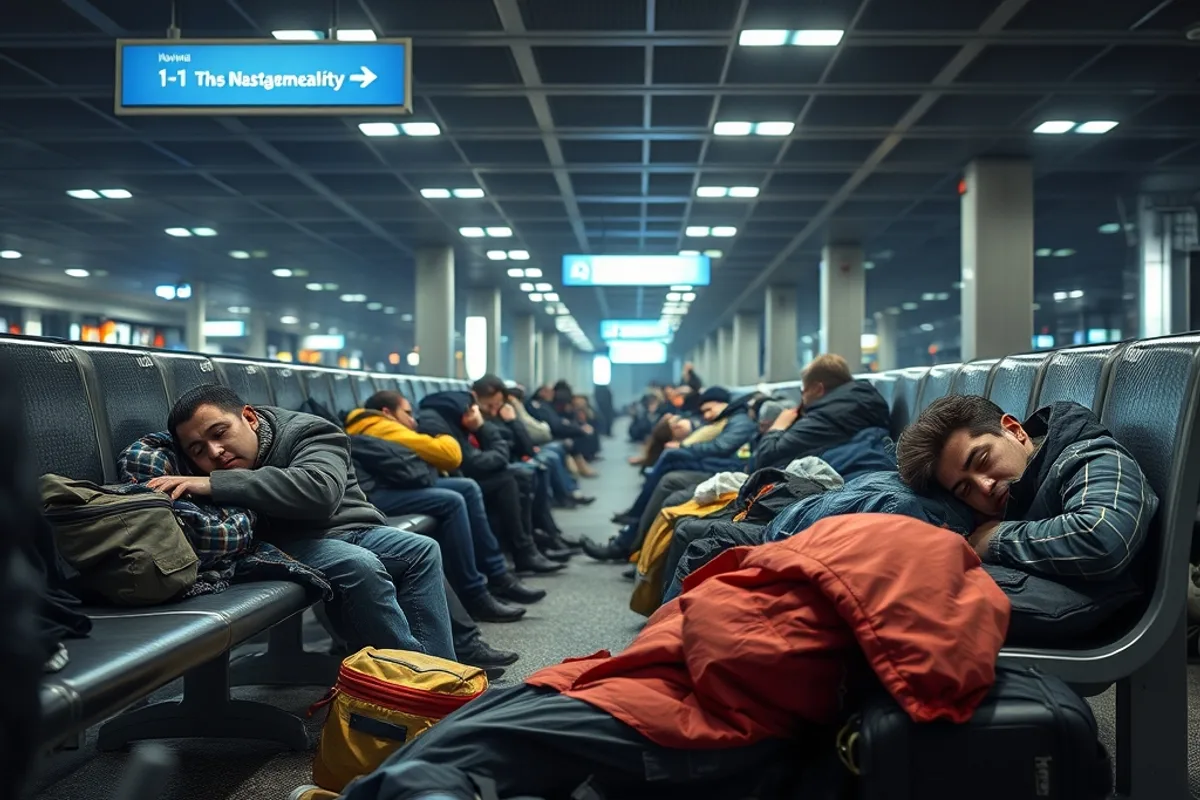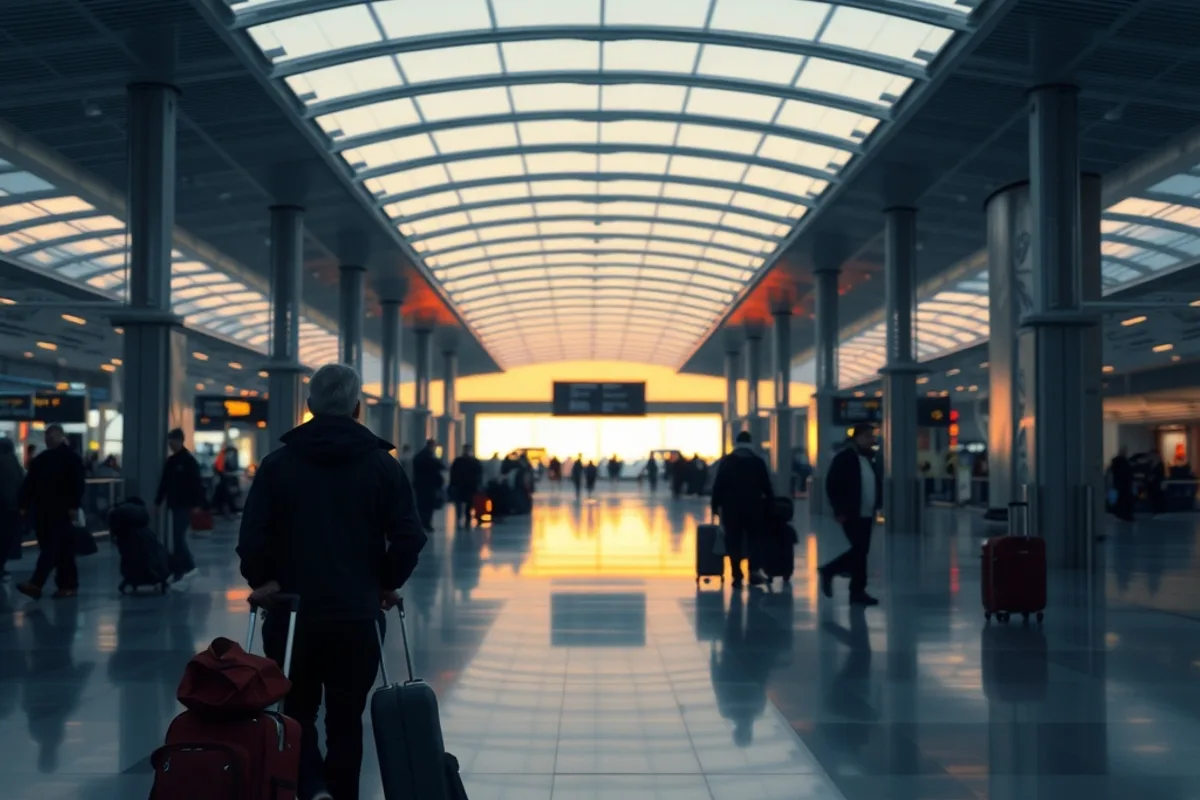
The first cancellations looked like weather. Then they looked like a crew shortage. By the third day, passengers at a dozen airports were staring at the same message on different screens: delayed, delayed, cancelled, and no clear explanation of which part of the system had failed.
The immediate cause was a software problem in the chain that assigns aircraft and crews to flights. The more useful story is why one failure travelled so far. Modern aviation is a tightly coupled schedule with very little slack, and the tools that manage it are fewer and more concentrated than most passengers imagine.
How a small delay becomes a stranded airport
A flight is not a single event. It is a slot in a day that depends on an aircraft arriving, a crew being legal to fly, a gate being free, a tug driver being available and a runway sequence that holds. Each of those is planned to the minute, and each has a knock-on effect.
When one input slips, the schedule does not simply shift. It propagates. A ninety-minute delay on the first rotation can push an aircraft into the evening bank, where it is needed for three more flights. The crew may run out of duty hours before the aircraft runs out of fuel.
Recovery is possible when there is spare aircraft, spare crew and spare gates. In a tightly optimised network, there is very little of any of those. That is not an accident; spare capacity is expensive, and airlines compete on cost.
The schedule is a prediction, not a plan
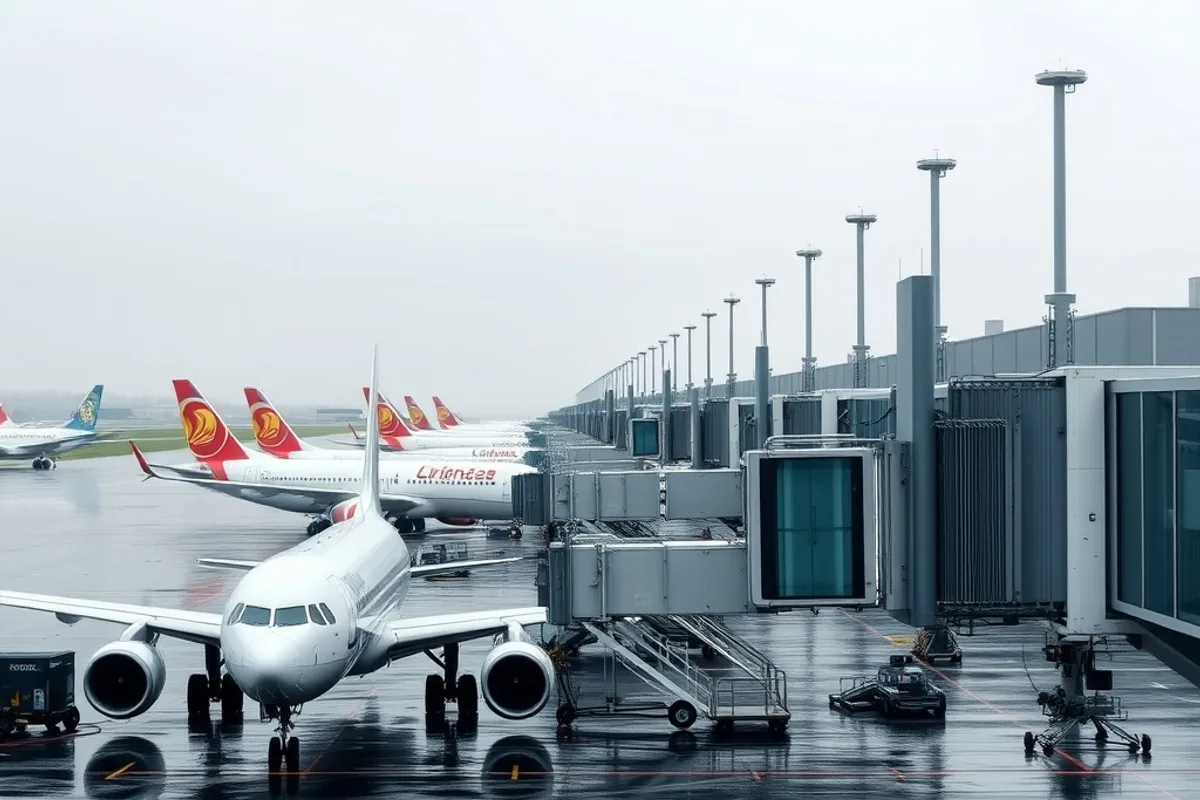
Airline schedules are built by optimisation software that squeezes the maximum number of flights out of aircraft and crews. That is efficient in normal conditions and brittle in abnormal ones. The plan assumes the inputs arrive on time, because that is what makes the numbers work.
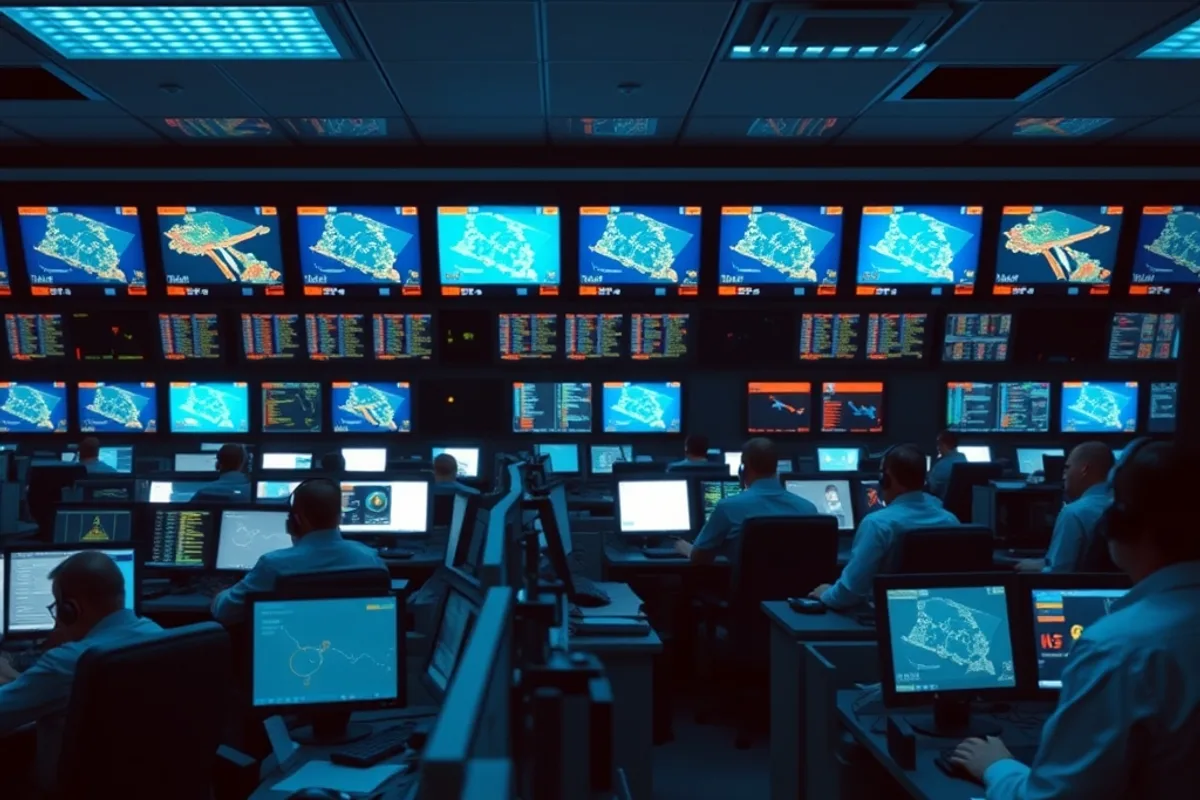
Operational control teams know this. They spend their shifts making small interventions to protect the next bank of flights: swapping an aircraft, holding a connection, moving a crew. Most days the interventions are invisible to passengers. On a bad day, they run out of options at the same time.
The industry has a phrase for the moment when the plan stops describing reality: the schedule disintegrates. Once that happens, the recovery is not a matter of fixing the original problem. It is a matter of rebuilding a day from scratch, with fewer aircraft and crews than the timetable assumes.
Crew time is the hard constraint
Aircraft can be refuelled, repositioned and repaired. Crews cannot be extended indefinitely. Duty limits exist for safety, and they are not negotiable in the way that a gate change is. When a crew times out, the flight cannot operate even if the aircraft is ready and the passengers are boarded.
This is why a delay that looks modest on the board can produce a cancellation hours later. The crew that was supposed to operate the evening flight may have been waiting since morning. Their clock started when they reported, not when the aircraft arrived.
Airlines can position reserve crews, but reserves are costly and are themselves limited. In a widespread disruption, every airline is calling on the same pool of standby staff at the same time.
Efficiency and resilience are bought from the same budget. For thirty years the industry spent it on efficiency.
Where redundancy was cut
The concentration is not only in aircraft. It is in software. Many airlines and airports run on a small number of scheduling, crew-management and departure systems, often from the same vendors. A fault in one can affect several operators at once, and the fallback is frequently a manual process that nobody has practised at scale.
Airports have also reduced spare gates and stands to free up space for retail and parking. That makes commercial sense until a bank of flights needs to be rebuilt and there is nowhere to put the aircraft.
The same logic applies to baggage systems and passenger screening. Each is designed for a peak that assumes everything else is working. When two systems fail together, the queue is not a inconvenience; it is a safety and capacity problem.
What passengers can actually do
The honest answer is: less than the advice columns suggest. You cannot control the schedule. But you can reduce your exposure. Book the first flight of the day where possible, because the aircraft and crew are usually already in place. Avoid tight connections in the evening bank. Keep your booking in the airline's app so you see changes before the airport board does.
If a disruption is widespread, contact the airline through its app or messaging channel rather than joining the queue at the desk. The queue is full of people doing the same thing, and the agent has the same tools. Ask specifically about rebooking on another carrier, overnight accommodation and the written reason for the cancellation, which matters for any claim.
Travel insurance helps only if the policy covers the specific event. Read the exclusions before you need them. “Missed connection” and “airline insolvency” are different risks, and a cheap policy usually covers neither.
The fix is boring and expensive
The measures that would reduce cascading failures are well known: more standby crew, more spare aircraft, tested manual fallbacks, separate systems for critical functions, and schedules with a little more slack. None of them are exciting, and all of them raise costs.
Regulators can require resilience reporting, but they cannot legislate spare capacity into a competitive market without affecting fares. Airports can require operators to hold contingency gates, but someone has to pay for the space.
The most realistic path is a mix: minimum resilience standards for critical systems, transparent reporting when disruptions occur, and a recognition that a schedule with zero slack is a promise the industry cannot always keep.
The chain, in order
- Aircraft rotation: one late arrival pushes every later flight using that airframe.
- Crew duty: the legal clock runs from report time, not departure time.
- Gates and stands: fewer spare positions make recovery harder.
- Software: a small number of vendors serve a large share of operators.
- Passenger rebooking: capacity disappears fastest on the busiest routes.
The bottom line
The week of delays was not caused by one bad decision. It was the predictable result of a system designed to run with almost no margin, exposed to a failure that crossed several operators at once. Until resilience is funded as a feature rather than treated as waste, the same cascade will happen again.
For a wider view of how critical systems fail under load, see our report on the shift to smaller, local AI models and why redundancy is moving back onto the factory floor.